Inside Compart

Comparting 2026

Compart |

A Platform for Future-Oriented Customer Communication

Post-Event Report Comparting 2026

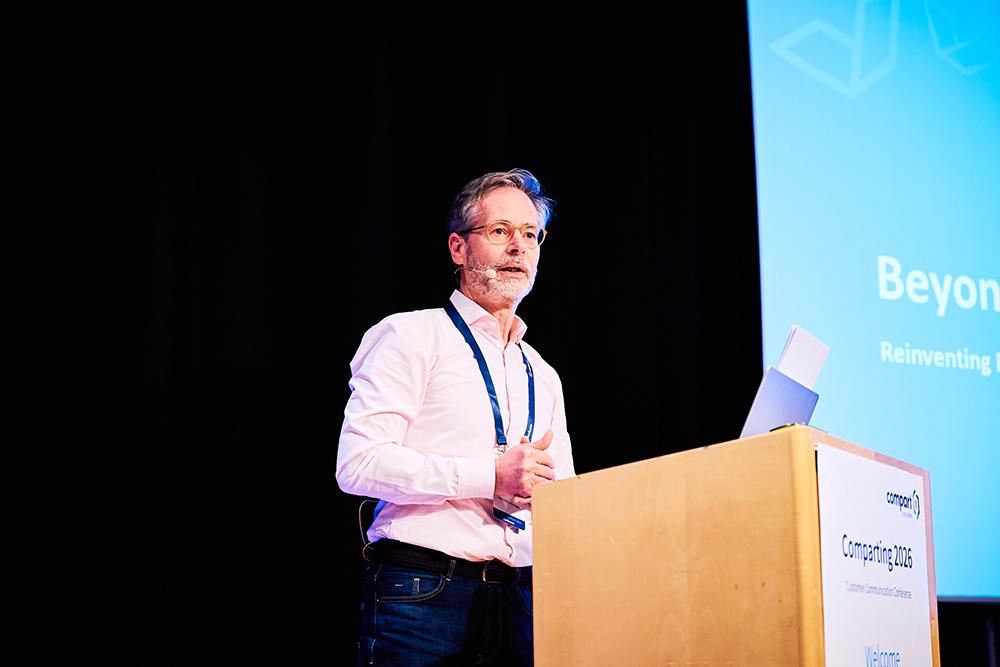
“AI will fundamentally transform our entire industry – both how we develop software and how we use it.”
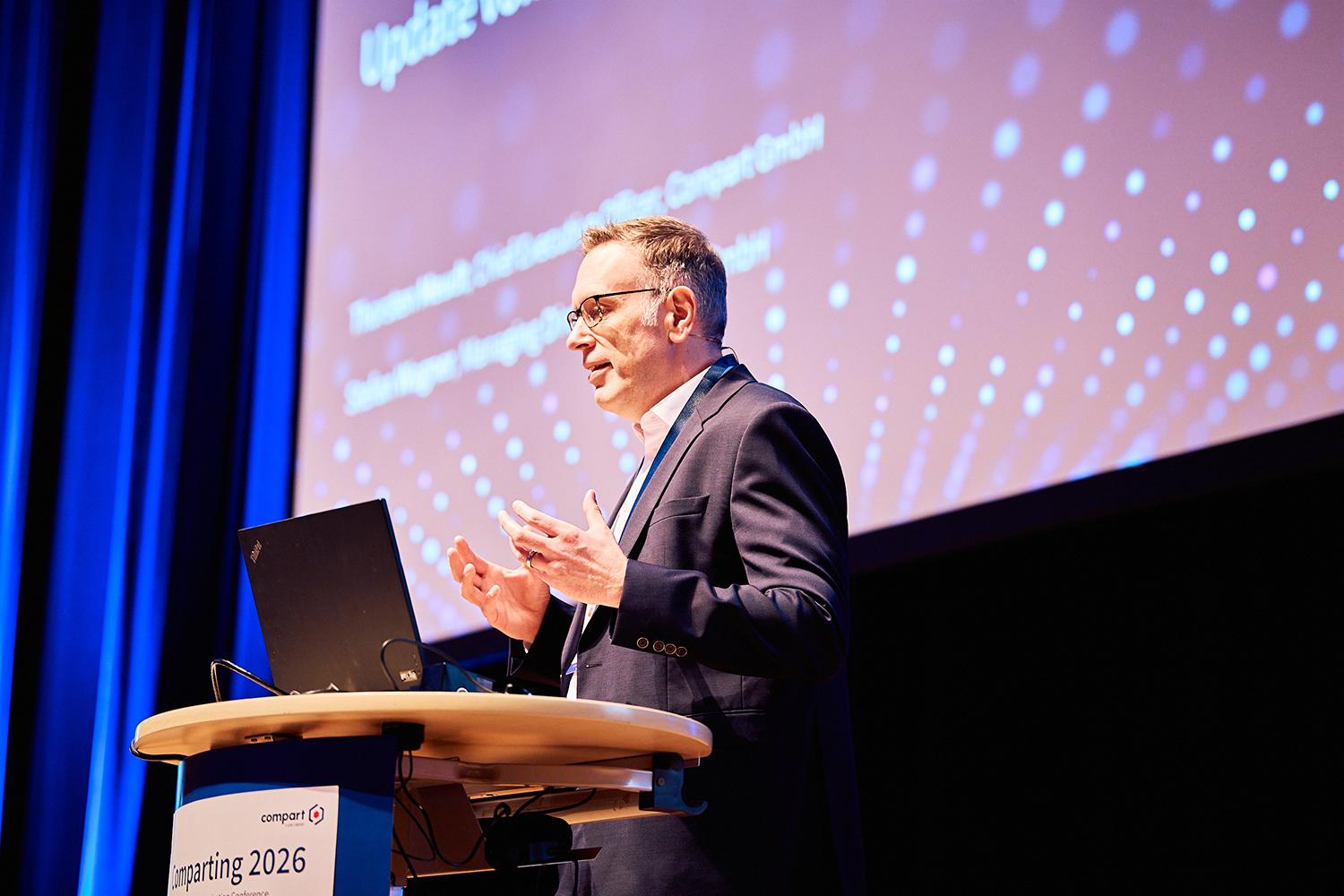
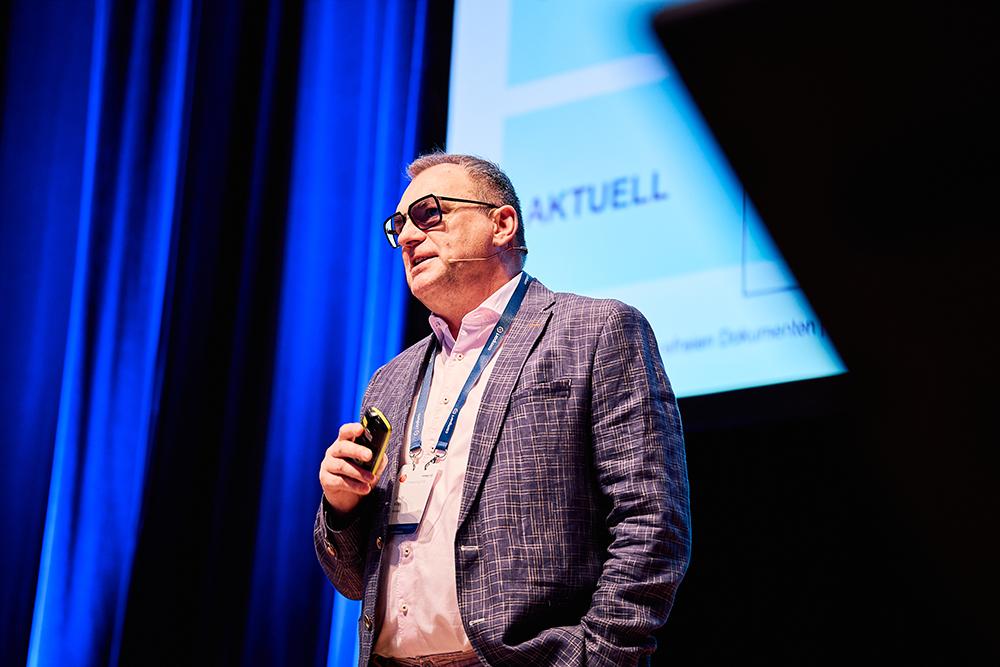
With this clear statement, Thorsten Meudt, CEO of Compart, opened Comparting 2026. The central theme of the event: the transformation of customer communication is already well underway.

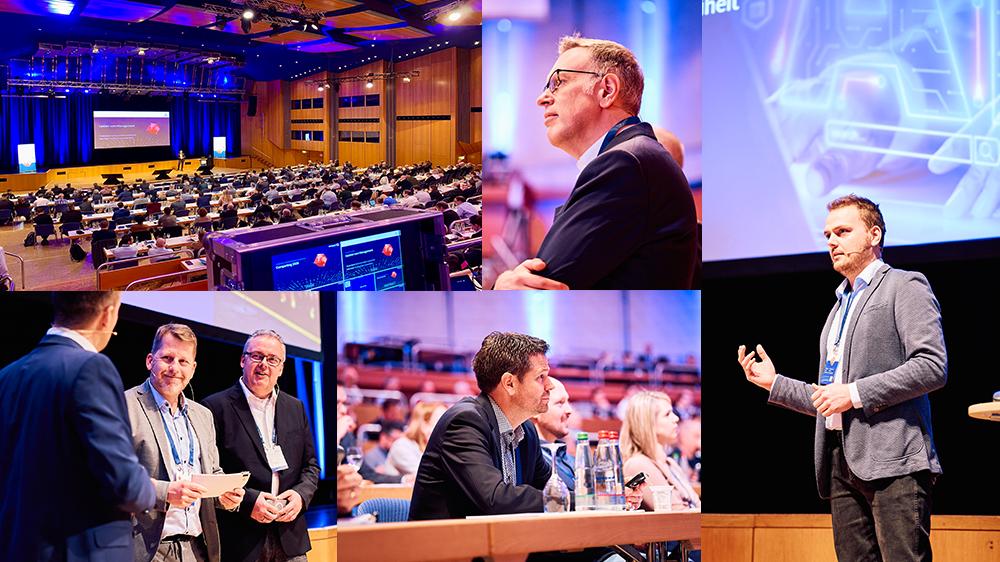
Across presentations, live demos, and conversations in the halls of the Stadthalle Sindelfingen, one thing became clear: artificial intelligence, automation, and omnichannel strategies are redefining what customers expect – and what companies must deliver.

A Key Meeting Point for CCM Experts

Under the motto “Communication from end to end – one process, many perspectives,” Comparting once again demonstrated why it is considered one of the leading events in the CCM industry:

  • Strategic perspectives meet concrete use cases and technological depth
  • Instead of abstract discussions, the focus is on proven solutions, real-world projects, and clear product strategies
  • Visitors experience how modern communication processes can be designed holistically and future-proof – and where the biggest challenges lie

Inside Compart: Continuity, AI Focus, and an Ambitious Roadmap

At the opening, Thorsten Meudt and Managing Director Stefan Wagner presented current developments and strategic priorities:

  • Leadership with a technology focus:
    Following the departure of Dr. Wolfgang Köstler, former CTO Thorsten Meudt has taken over as CEO – with a clear emphasis on product and technology development and delivering the best possible user experience
  • Stable team as a success factor:
    The core team remains unchanged, ensuring the continued development of the DocBridge Communication Suite and DocBridge Production Suite
  • Solid growth:
    The DocBridge Production Suite (output management) is firmly established; demand for projects around the DocBridge Communication Suite is noticeably increasing.
  • Support for numerous customers in providing accessible PDF/UA documents:
    including AI-supported tagging templates, fully automated generation of accessible documents, and quality assurance workflows
  • AI evolving from experiment to product feature:
    Since spring 2025, the AI assistant within the DocBridge Communication Suite has been officially available, handling tasks such as template generation, PDF/UA tagging, and template migration – delivering measurable efficiency gains
  • Agentic AI and future technologies:
    Compart is driving the shift from assistive AI to agent-based workflows, with clear safeguards, human-in-the-loop mechanisms for critical steps, a unified technology stack, and flexible Any-Prem deployment (VM, private cloud, VPC on AWS/Azure)
Comparting 2026 Vortrag von Thorsten Meudt, Compart CEO

Thanks to its consistent focus on open standards, Compart can leverage existing AI models and apply practical expertise in a targeted way – creating the ideal foundation to rapidly deploy AI, develop innovative communication solutions, and achieve efficiency gains across the entire communication chain.
 

Insights into Successful Projects – From Idea to Implementation

During the two conference days, numerous customer projects were presented, demonstrating how Compart products are effectively used in practice and deliver measurable added value.

Do you have questions or new topics to explore?
Let’s discuss them one-on-one:
Schedule a consultation

From the wide range of projects, the following selected presentations illustrate how companies are optimizing their customer communication with Compart solutions.

OWL-IT: Successful Migration to the DocBridge® Communication Suite

Jan Tümce (Head of Print and Dispatch) and Michael Frieg (Output Manager) demonstrated how OWL-IT successfully replaced its existing output management solution with the DocBridge Communication Suite within just four months – despite limited personnel resources and complex procurement requirements. The project established a stable and high-performance foundation for producing election notifications for the 2025 municipal elections in the State of North Rhine-Westphalia, as well as for future processes.

 
Challenges included: The decision against a 1:1 migration, rebuilding modular templates within tight timelines, complex metadata and QR code requirements, and customer-specific variants.

OWL-IT Vortrag Projekt erfolgreiche Migration

Project results:

  • Significant performance and cost advantages (reduction from 8 to 2 servers)
  • Increased standardization and automation
  • Implementation of more than 45 templates with 138 containers
  • Reliable large-scale testing with millions of documents
  • Productive use in the NRW municipal elections (33 municipalities, 923,000 mailings)
     

“In our legacy system, it took 1.5 hours to generate the print file for election notifications for our largest customer. With the DocBridge Communication Suite, it’s done in 15 minutes.”

Michael Frieg, OWL-IT

BarmeniaGothaer:
Central Conversion for Input Management

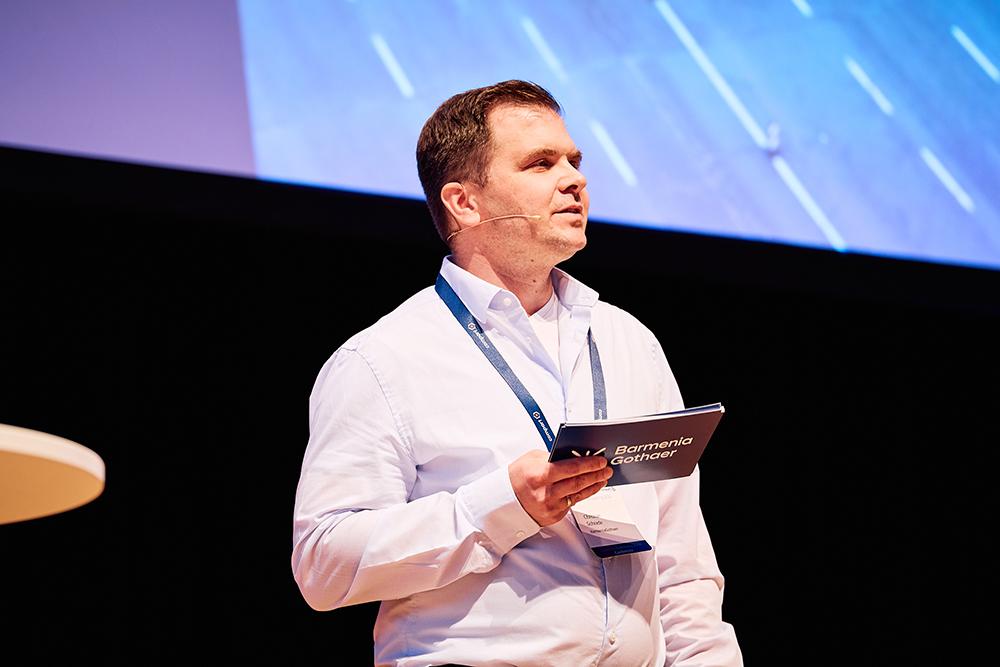
Alexander Nimtz, Christian Schrade, and Henning Nüßler demonstrated how a service-oriented conversion solution manages the daily format diversity of incoming data from emails, PDFs, Office documents, images, and nested containers.

A key insight: “Input diversity is not an exception – it is normal operation.” Therefore, the decisive factor is not just conversion itself, but upstream analysis – identifying content, resolving containers, and only then processing data in a standardized way.

Comparting 2024

Technically, the solution is based on a clear separation of services with two conversion masters and multiple worker nodes that distribute and process conversion jobs in a scalable manner. The presentation also addressed typical operational challenges, such as blocking pop-ups in unattended processing or content that cannot be meaningfully converted.

The conclusion: “The simpler a process, the more stable it is.” Through consistent standardization, automation, and reduction of complexity, a robust architecture was created that consolidates diverse input channels into a unified processing workflow.

Mobilize Financial Services: From System Diversity to a Standardized Communication Platform

Karim Tsouli, International Director IS/IT at Mobilize Financial Services (Renault Group), explained how increasing cost pressure, regulatory requirements, and new business models are fundamentally changing automotive financing – and with it, communication requirements.
At the center is a large-scale transformation program (2024 - 2032) aimed at harmonizing IT systems across the ten most important European markets and achieving around 80% standardization.

The starting point: heterogeneous systems, around 1,200 document templates in Germany alone, and complex country-specific requirements.

Solution: The introduction of the DocBridge Communication Suite as a central CCM platform to standardize document creation, processes, and communication channels (PDF, email, WhatsApp, SMS, etc.).

Results:

  • Communication becomes an efficiency driver rather than a cost factor
  • Reduced operating costs and faster implementation of changes
  • Consistent, scalable communication across all markets and channels
  • High integration capability for both existing and new system landscapes
     

“We are firmly convinced that we have made the right choice for the future.”

Karim Tsouli, Mobilize Financial Services

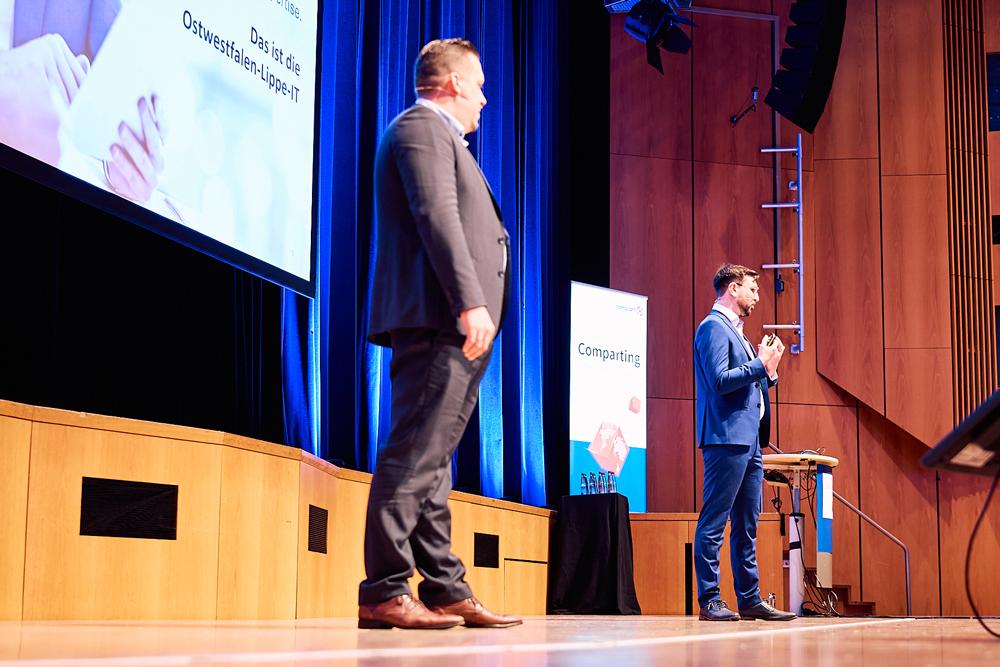
Presentation at Comparting
Vortrag Comparting

enovetic: Building a Cost-Efficient Kubernetes-Based OMS Platform

Sven Tänzer (CEO), Bendri Batti (CTO & CIO), Marc Dühring (Product Owner) at enovetic, together with Dirk Engberg (CEO of Engenius, partner of Compart), reported on the migration from a historically grown system landscape with more than 40 servers to a modern Kubernetes-based OMS platform.
The system processes over 9,000 template variants for more than 250 clients and generates around 40 million pages annually. Additional challenges included performance bottlenecks during peak loads of up to 5,000 documents per minute, non-representative HTML previews, missing email tracking, and high infrastructure costs for handling peak loads.
Solution approach: cloud-native architecture based on Kubernetes, modular service separation, automated deployment, autoscaling, linear scaling of batch jobs, and orchestrated processing of different workloads. All templates were migrated into a standardized DFF-based system.

Results:

  • Batch processing accelerated by a factor of 100
  • Nearly doubled ad-hoc document generation
  • PDF previews replacing HTML previews (“what you see is what you get”)
  • Reduced infrastructure costs, improved stability and transparency
  • Solid foundation for future expansion

A key learning: “Cloud is not a faster server.” Structured architecture is essential for real scalability.
 

OTP Bank: From Monolithic Document Factory to an AI-Ready Communication Platform

Dominique Nagy (CEO of Innodox Technologies) reported on the transformation of one of the largest customer communication platforms in Central and Eastern Europe.

The starting point was a monolithic “statement factory” that had evolved over more than 15 years, producing around 120 million regulatory documents annually, plus 15 million business communications.

The main challenge was not the migration itself, but the accumulated complexity: business logic embedded in templates, limited transparency, high effort for changes, and strong dependency on IT - while requirements continued to grow. Approach: architectural redesign with a clear separation of template design and business logic, a modular platform with governance and automation layers, and a step-by-step migration instead of a big-bang approach.

„AI is the next layer. But without architecture, AI is just noise.”

István Pancsor, Digital Tribe Lead OTP Group

Innodox

Results:

  • 700 templates restructured and reduced
  • Batch runtimes reduced from 16 to 10 hours
  • Increased scalability and stability
  • Greater autonomy for business departments
  • Improved governance, auditability, and compliance

Key takeaway: complexity drives costs – operationally, technically, and in business speed. Only by decoupling logic and layout and implementing a clearly structured platform can a foundation for true agility be established. A structured, standardized platform provides the basis for using AI effectively and in a controlled manner in customer communication.
 

“A well-designed communication platform reduces costs from the outset while simultaneously improving speed, consistency, and the customer experience.”

Dominique Nagy, Innodox Technologies

DATEV & DATEN_PARTNER: Collaboration as a Strategic Advantage

Faced with increasing market demands for speed, scalability, and resilience, as well as regulatory requirements such as DORA, DATEV and DATEN_PARTNER chose a strategic partnership approach. Solution: Together, they developed a productive solution that is already in use: load balancing and backup production across company boundaries, with a single central contact for the customer.

DATEV brings experience, scalability, and market trust. DATEN_PARTNER provides flexibility, speed, and operational proximity. The partnership combines stability with agility – a clear competitive advantage. The technological foundation is the Compart platform, which enables seamless integration and flexible transfer of production data between the two partners through standardized interfaces and transferable configurations.

DATEV & DATEN_PARTNER

Results and benefits:

  • Increased reliability and resilience through cross-company production
  • Shared investments and risks: joint investments create stability and make risks more manageable
  • Reduced complexity: no duplicate onboarding, less vendor management
  • Efficiency gains: elimination of backup tests and simplified processes
  • Scalability: flexible load distribution during production peaks
  • Transparency: unified reporting and clear responsibilities

Key insight: Collaboration – even among competitors – can be a decisive driver of growth and innovation. Or, as Martin Lemke, Chief Digital Officer at DATEN_PARTNER, and Alexander Feldmann, Project Manager at DATEV, put it: “The future belongs to those who collaborate.”

BGW: Efficient Output Management as a Driver of Transformation

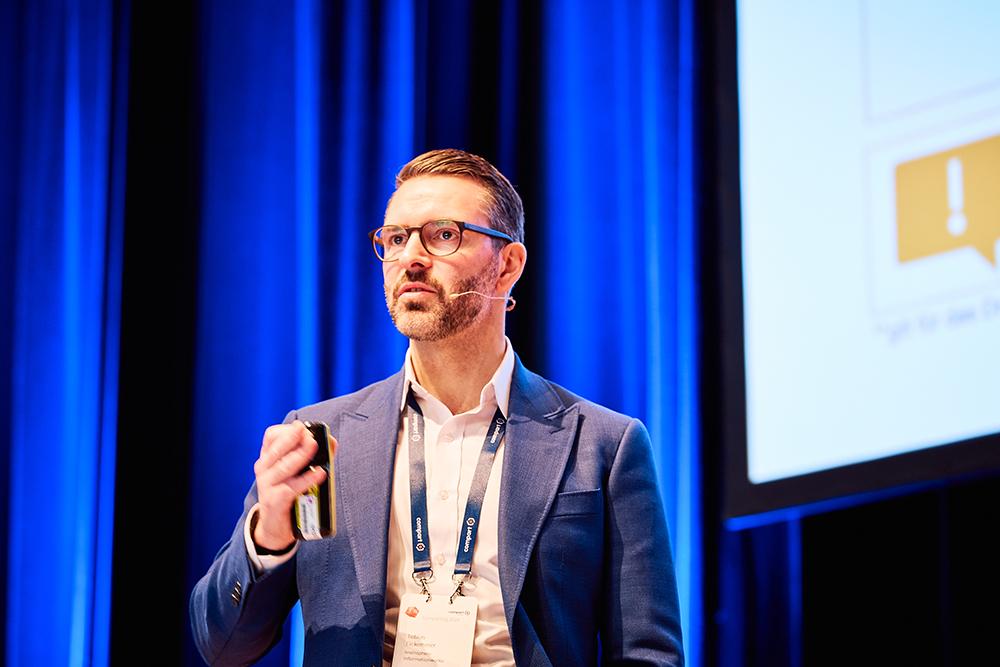
In the presentation “Visible. Secure. Smart.”, Tobias Eickemeier, Senior Manager at brainsphere informationworks and partner of Compart, demonstrated how a realignment of output management at BGW combines technological and organizational transformation. Core elements included end-to-end processing of PCL and PDF data streams, integration of various document types, automated address validation, and a new processing chain based on a DocBridge Pilot input instance and a full output instance. The goal was centralized processing of documents produced decentrally, replacing over 350 multifunction printers, introducing a user-friendly form management system, and establishing a vendor-independent printing concept.

Results:

  • More than 85% of print volume already centralized (target >90%)
  • Over 8.2 million pages processed annually
  • Significant time savings - around one hour per employee per day
  • Full transparency of document status throughout the process

Technical highlights include live address validation, archive and batch integration, and cancellation of ongoing productions. A key success factor for success was the user-centric approach: early involvement of business units, intensive communication, and tangible added value in daily work led to high acceptance and lasting change.

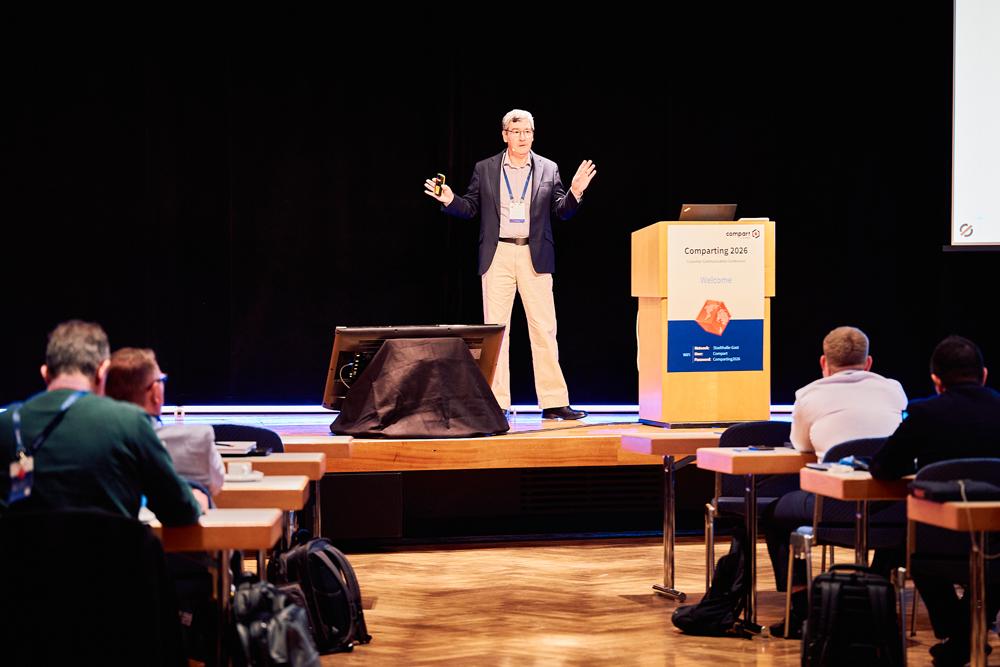
Presentation at Comparting

In another practical presentation, Hardy Klödy, Tribe Lead Operation Services at Atruvia, reported on the migration of document-centered mainframe applications to accessible, modern output formats. The focus was on structured analysis of existing applications, iterative development of an initial solution, and continuous optimization based on end-user feedback. A key advancement was the improvement of tagging and usability, particularly by enabling business units to perform accessible tagging independently.
 

Michael Adamitzki, Head of Document Services at ITERGO / Munich Re Technology Group, explained in his presentation that “digital enrichment” goes far beyond merely digitizing existing documents. Customer communication must evolve fundamentally – similar to how maps have developed from paper to intelligent, context-sensitive systems. At the same time, complexity is increasing: new communication channels, diverse formats, and growing requirements for archiving and traceability pose major challenges. The main focus is on four aspects: integration, real-time capability, new formats, and a consistent orientation toward user behavior. Compart plays a key role as a technology partner, enabling this transformation – for example, through automated creation of accessible documents (PDF/UA) and intelligent processing of output throughout the communication process.

Conclusion: The goal is not just to provide existing content digitally, but to enrich communication so that it genuinely improves the customer experience.

Networking and Evening Event

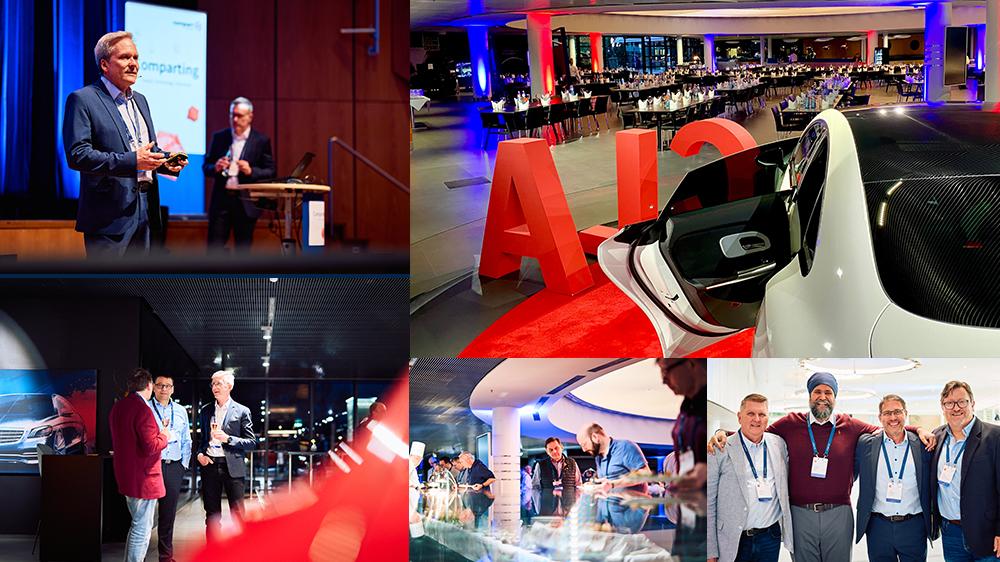
In addition to the technical content, personal exchange played a central role. The evening event at the Mercedes-Benz Customer Center Sindelfingen provided participants with an ideal opportunity to deepen discussions and establish new contacts. In a relaxed atmosphere, the day concluded with dinner and networking – a staple of Comparting that highlights the event’s community spirit. The “Meet the Experts” consulting booths were also heavily used, offering valuable opportunities for one-on-one discussions and direct exchange with Compart specialists.

Comparting CCM-Event
Conference on Customer Communications

Conclusion

Comparting clearly showed that modern customer communication must be considered holistically. A central insight emerged: digital channels do not replace traditional communication but complement and extend it, generating new requirements for system architecture, processes, and user interaction – demands that can only be met with a carefully designed technological foundation. By combining technological innovation, practical project insights, and intensive peer exchange, the event serves as a crucial platform for anyone seeking to make their customer communication processes future-proof.